While reflecting on Jess Whatcott’s “Still a Locked Door,” I wondered how much freedom we actually have whilst naively believing that everyone deserves equal opportunities and the ability to make their own choices. How much of these “privileges” actually exist when society has already decided who belongs and who doesn’t. Whatcott provides a very good analogy with a locked door; representing the invisible boundaries that society creates around certain groups of people according to what they believe is normal or not.
Society can claim to be progressing toward equality while still maintaining systems and practices that exclude people. Often, we associate blatant acts with discrimination but sometimes there are invisible barriers that are built within institutions and society collectively. Not everyone experiences the system equally, some people can have the same rights but still face complexity different limitation and boundaries even when trying to exercise these rights and freedoms and it is up to us as a society to be aware and as inclusive as we can and making productive steps towards these systems.
What specifically stood out to me was how we define inclusion and view responsibility. When someone struggles with access to opportunities, society faces that problem personally towards that individual and what they could do differently. A lot of this shifts attention and responsibility from institutions and systems in place for creating inequality and therefore being counterproductive. This places a heavy burden on the people experiencing this exclusion. Society is proven to be more comfortable making minimal adjusting to existing systems rather than questioning why those systems were exclusive in the first place. Collectively, we find ways to make these barriers appear less restrictive without really removing them.
It is extremely important in order to be a progressing society that we hold ourselves and institutions accountable as well as ourselves. We need to acknowledge that these barriers in our society actually exist and who all benefit’s from keeping them in place and why they continue to exist.
Think of being unable to contact your loved ones, seeing them face to face, or even leaving your cell for an indefinite period of time. That is the situation that befell thousands of California prison inmates in June 2025, when the state introduced sweeping restrictions in as many as 24 prisons. As described by CalMatters, almost 34,000 inmates were restricted in terms of their activity and movement, due to security concerns regarding violence, overdoses, and contraband. All phone calls, visits, communications via tablets, as well as rehabilitation programs were suspended. Although it might have been claimed that these restrictions were justified for the sake of security, I believe that it brings up a bigger question of when protection becomes punishment of all involved parties, regardless of whether they deserve it or not. The thing that made me realize the gravity of the situation the most is the fact that there had not been any announcement about the end date of these restrictions.
What makes this case even more disappointing is the fact that prisons are already facilities that limit the freedom of those who are confined there, which makes one wonder how limiting most forms of contact with the outside world may affect an already challenging experience. As it is reported in the article, family members were concerned about their relatives’ well-being and did not know if they were safe. Personally, I cannot comprehend what kind of stress it must be to have my relative in prison and not be able to reach out to him or her. Sometimes, a simple call may do wonders for the well-being of a person, and depriving people of such opportunity can certainly harm their psychological state. The measures were introduced to address the issue of potential violence that exists in prisons, and all staff members should feel safe in the workplace; however, it is still hard to see the difference between tackling certain issues and introducing limitations to thousands of people without setting any date.
Here, too, the hunger strike becomes relevant to our discussion. Less than a day after the restrictions came into effect, the inmates of Salinas Valley State Prison started a hunger strike in response to what they perceived as unjust restrictions, collective punishment, and violation of their rights. According to an advocate, there were around 500 participants. As for me, the fact that the people chose this type of action to make their voices heard demonstrates the desperation they felt. Moreover, the chosen action relates to another reading on this week’s agenda: in the article “Still Burning: Self-Immolation as Photographic Protest”, Michelle Murray Yang talks about the use of extremely violent protests by the individuals to bring attention to the injustice done to them. In particular, Yang refers to the famous picture of the Buddhist monk Thich Quang Duc, who staged his self-immolation in 1963 as a protest against religious persecution in South Vietnam. Despite the fact that this type of protest action differs greatly from a hunger strike in a prison, both cases are similar in terms of people’s willingness to engage in such an extreme type of protest when other means are no longer effective.
Another interesting aspect of Yang’s article is the fact that strong visual images and stories may challenge what is going on rather than accept it as it is. For example, the photograph of Quang Duc’s protest attracted the attention of the whole world and was later used by those who opposed the war to persuade people to speak out. This is an example of the power of media to spread the word about someone’s experience. In my opinion, the same concept should be applied to the incarceration stories. When hearing the word “prisoner,” people tend to stop thinking about a real person whose emotions, family, and needs are important. Incarcerated people are not animals that have no right to voice their experiences. I thought about the same thing when reading about the new California restrictions because it became clear to me how much the way of thinking depends on one’s side of the story. For example, hearing the explanation of the government, one may consider the lockdown measures to be just necessary steps for the sake of security. That does not mean every protester’s claim should automatically be accepted as fact, but it does mean their concerns should not be dismissed without being examined.
Overall, both articles brought to my mind the importance of having a chance to protest when one believes that something goes wrong. The act of protest may come in many different forms, but the truth is that it might uncover the issues that might remain unnoticed at first glance. In my opinion, maintaining safety within prison institutions and treating inmates like real human beings should not be two contradictory concepts. On the contrary, the way that, in my opinion, should be adopted involves dealing with particular security issues and letting people access their families, get proper treatment, and have an opportunity for rehabilitation as much as possible. The main question that comes to my mind in this case is: what if people start feeling like there is no one who listens to them? In this sense, Yang’s article indicates that there are some acts of protest that might force the public to ask: “What now?” I think that this question is quite appropriate in our case as well. Once we understand the issue and the people who have to face it, we will have to think about the future actions to be undertaken. At the end of the day, being willing to listen is a small step, but it can be the beginning of real change.
I’ve spent most of my life believing I was fat, and thinking that was a bad thing. I was born with a stomach that stuck out, as stomachs tend to do, and I grew up thinking I was fat because of it. That was pretty much the only reason. I remember feeling insecure about my body as my mind compared it to others in every situation I found myself in. I was one of the fattest kids in my large extended family. I was one of the fattest kids in most of my classes. I was one of the fattest kids I knew.
That’s what my mind told me. None of it was true.
I was born with a stomach that stuck out, and thin fingers that were paler compared to the rest of me. I have a short, boxy torso, and bony joints. For about 18 years, that’s how I thought about my body.
I am fat.
But some parts of me are skinny.
I didn’t think they could coexist as partial truths when I was younger. There was usually just one truth, and sometimes it was replaced by another.
Looking back, I can say that regardless of the connotation or context of the word, deeming myself fat was inaccurate at best and idiotic and harmful at worst. But because of the way society sees fatness as a moral failure that’s constantly being redefined, I grew up thinking that being fat was a justifiable reason for disrespect. Not necessarily because of how I felt personally, but because I don’t remember anyone disagreeing. I thought that inevitable disrespect applied to me too, but I was never fat. The world just convinced me I was.
It’s crazy to me how widespread fatphobia’s become in the past few decades alone, with things like “heroine chic”, GLP-1s, being obese/overweight, diet culture, and so much more. It’s all just normalized. It’s infinitely harmful to people, but it’s inescapable. There are no exceptions. I just wish the lenses we examine ourselves through were a little kinder.
Growing up as an Indian girl, it is inevitable to hear comments regarding your skin color. I constantly heard comments like “Don’t go out in the sun; you will get darker” or “You were much lighter as a child”. These comments never really bothered me because I was content with myself. Most times, it felt like they wanted me to feel upset about being darker-skinned and see that as a minus.
I can’t blame them because these are values that are instilled in Indian society, and I’m positive the same people grew up hearing the same comments. Colorism is extremely complicated in Indian households because it often isn’t from malicious intent; they truly think they are trying to help with these comments, which makes the situation more heartbreaking. It’s very sad to see that they think these types of comments are supposed to help them. These harmful ideologies are so incredibly normalized.
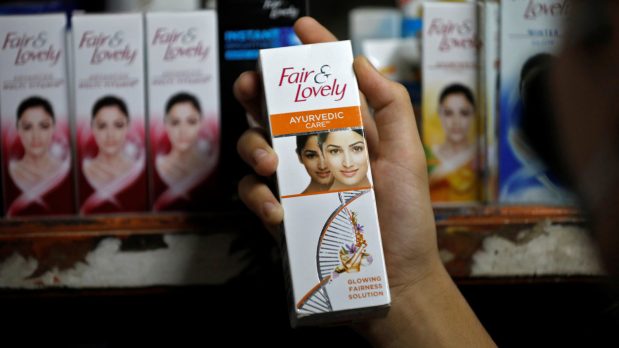
India has a huge colorism problem. One of India’s most popular moisturizers was called Fair and Lovely, and it was meant to make your skin lighter. Lighter skin is seen as more beautiful while darker skin is seen as ugly. This is due to darker skin being often associated with the lower class, caste, and poverty.
This ideology is not only prevalent in families and in business but also in the Indian movie industry. The majority of actresses in Indian movies are light-skinned and don’t reflect what the majority of Indian women look like. An example of this that is absolutely bizarre is when I learned about a British white actress who played many roles as an Indian woman. I was shocked when I first learned about that because it was insane that a white woman was cosplaying as an Indian woman. It was setting up standards for the audience that are unrealistic and overall disgusting.
History also plays a role in this harmful ideology. Colonialism had a huge impact because it reinforced racial hierarchy where whiteness is at the top and is seen as the standard. Whiteness is also associated with power and wealth.
This topic reminds me of when we listened to The Danger of a Single Story by Chimamanda Ngozi Adichie and when she talks about how a limited narrative shapes how we view and understand the world and people. This applies to viewpoints on colorism and how a single view impacts others and how we view ourselves.
The single story in this situation is that lighter skin is more beautiful than darker skin. This single story has been repeated and continued within families, media, and movies, and it has shaped a society that looks down on dark skin and caused dark skinned people to find fault in themselves
Colorism is an extremely complicated topic that not only exists within the South Asian community but also among other ethnic groups. I believe that addressing this harmful ideology is the beginning of making sure this single story is no longer spread.
We cant help but relate things we see to anything similar we have seen before, this trait we have developed we apply to everything people included. We love to put people in a box based on their appearance, their identity and their way of life, but no box is large enough to describe all that a person is.
The readings the past week have made me think about how our society has convinced itself that the way we operate now is functionable, and we punish those who don’t or refuse to conform, that they are the ones who need fixing. The first narrative in class that first made me think about this was the Maintenance Phase podcast episode, Fat Camp. Essentially, these camps are for children to lose weight. Many of these kids report bullying in school, lack of friends, and isolation. These kids, as observed from the documentary they played, also received verbal harassment from their parents to lose weight. The agreed solution for these issues is to send them to a camp, away from family and friends to put them on strict diets and intense exercise. The solution is to “fix” the kids. These children don’t learn important lessons about their body. Their peers don’t learn important lessons about bullying or people who are different from you and their parents don’t learn important lessons about their children. None of these people unpack the actions they’ve endured, or the actions they have taken. We undertake individual solutions to social problems.
These kids’ problems are not individual. These kids don’t speak into the camera about how it’s harder for themselves to walk or play, in fact much of the footage of them at home is exactly that, them playing in the skate park, or running around with friends. These kids lament about how they’ve been ostracized for their weight, at school and at home. They don’t end up hating their bodies in a vacuum. The problem that needs fixing is not the children, or anyone who is fat, but rather the society that alienates and otherizes fat people. A society that is obsessed with diets and weight loss and justifies the harassment of fat people. Why should the marginalized have to change themselves for a problem they did not create? A problem that they have are the victims of?
A similar concept is presented in “When Coercion In Care Makes Kilmeade’s “just kill ’em” Thinkable” a blog post by Shannon Pagdon on the Disability Visibility Project website. The post discusses how our society demonizes people with mental health and forces them into institutions, robbing them of their autonomy. Further along in the article, Pagdon mentions laws that seek to “fix” the growing homeless population by forcibly placing the homeless into psychiatric wards and forcing people with mental health issues into treatment, threatening legal sanction if they don’t. Harmful solutions are only undertaken to “fix” the individual. They strip them of autonomy, remove consent, forcibly place them in institutions and inject their bodies against their will. These resources are not used for community or housing support but rather control of the person. The problems that are caused by society are not treated as the social issues they are, the individual and only the individual needs to be “fixed.”
When I look back at photos of myself, I see a puppy whose paws are too big for his body, arms and legs too long, and hands and feet too big. In elementary school I was a pretty tall kid and that tallness came with pride, when transitioning to middle school however the pride was slowly stripped away. My height, although advantageous on the surface level, left me open to ridicule in other areas.
When people go for a walk outside, they admire the atmosphere, surroundings, and the weather. But eventually, during that walk, they start to think about whatever topics are on their mind that day. Like what’s for dinner, how long it’ll take to get home, what their friends are doing, their hobbies, their lives, etc. But when you’re trying to exist in a society that has done everything to reject or be repulsed by you, it’s hard not to internalize it and ponder it. You start to wonder if your clothes look okay, how your face looks, your hair, and eventually you start to question your entire appearance and take it apart piece by piece until there’s nothing left. All just to make sure that you fit within this version or idea of yourself- what you should be or what’s “authentic” to your personality and ideals- but what truly defines authenticity?
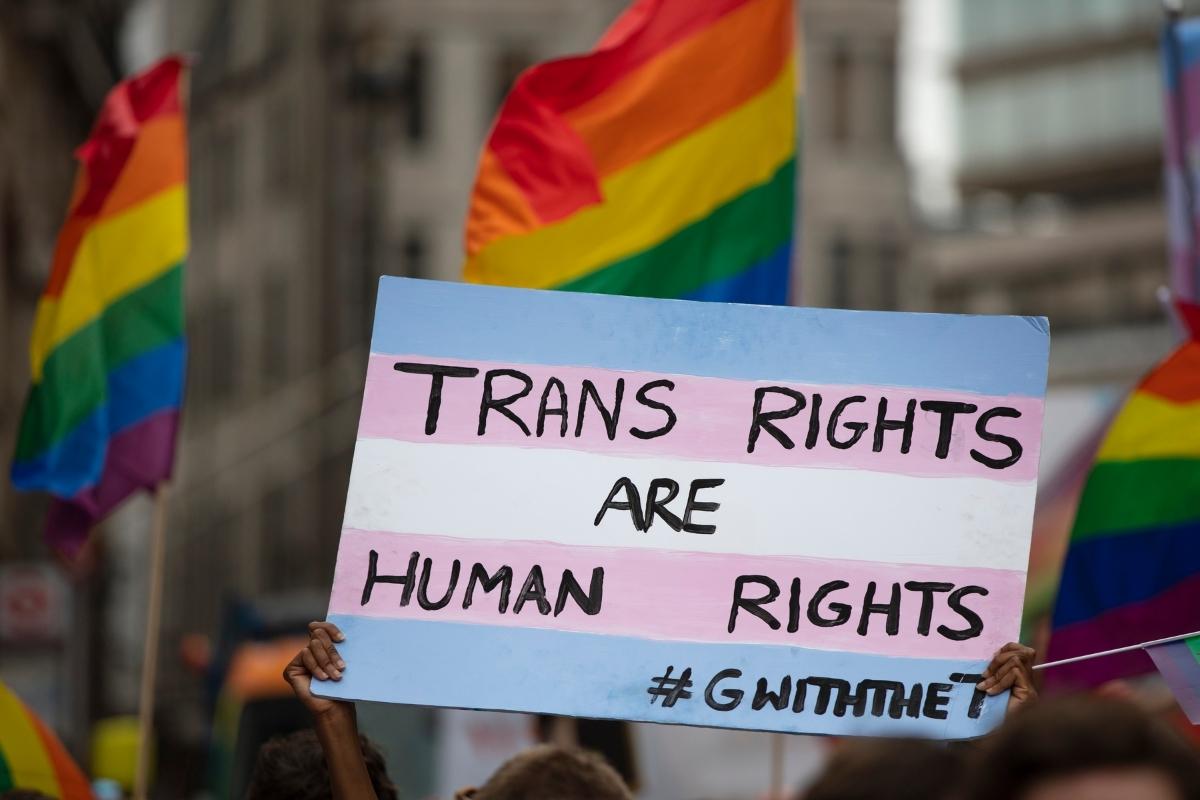
This is what I thought of while I walked home after reading ‘My Words to Victor Frankenstein’ by Susan Stryker. In the reading, the author discusses how society viewed people who were transgender as otherworldly and perverted, and found disgust in their existence. They made a connection to Frankenstein because society thought that they mutilated their bodies to fit in and would never be accepted. By society’s standards, they could “never truly be whoever they want to be”. But the author triumphantly combated those views and wanted society to recognize that just because people feel uncomfortable, unseen, and not right in the bodies they’re currently in, they’re still human nonetheless and not just some inhumane creation that society draws them out to be. They’re actual human beings just like everyone else, with families, friends, thoughts, passions, and emotions. Yet society’s bias towards what’s authentic enough is what prevents them from acting like decent human beings to others who may just be even a sliver bit different than what they can fathom.
CW: weight loss, weight gain, weight loss medications, obesogenic medications, medication side effects
Wegovy. It could alleviate the cognitive dysfunction of the post-viral condition I have been dealing with for decades, the bonus amount I acquired free with Covid, or both (reports return that I could brain with some reduced level of difficulty, which is rather exciting). It could cause thyroid cancer (but maybe only if I were a mouse). I might lose the 35-odd extra pounds I gained thanks to a prescribed antidepressant (if I were among the small percentage who lose 20% of their bodyweight). I might lose a goodly deal of my hair. It may be a godsend. It may make me end up looking like a Simpsons alien, and give me some pretty severe pancreatitis as well. Thanks to insurance and a manufacturer’s discount card, it would cost me $25 a month to find out first hand*.
As Hunter S. Thompson would say (about much more exciting things than this), “Buy the ticket, take the ride.” Will I take on this body project? Apparently I am lacking in gonzo or this would be a field report from the GLP-1 agonist trenches rather than my ambivalence regarding entering them. The Maintenance Phase podcast episode on Ozempic has helped me get a better idea of the matter, but at the time of writing this paragraph, I still haven’t decided. Read on to find out if I do by the end of this post.